Table of Contents

AI agents for small business help teams automate repeatable work, respond faster, and measure ROI without adding unnecessary complexity.
From Chatbots to AI Agents: How SMBs Can Turn Everyday Workflows into Always-On Digital Team Members
For many small and mid-sized businesses, the real question is no longer whether to use AI. It is where AI can create measurable business value first.
That shift matters. Recent SMB research shows that 75% of SMBs are experimenting with or using AI, and 34% have already fully implemented it in their operations. Among businesses already using AI, 91% say it helps boost revenue and 90% say it improves operational efficiency. In other words, AI is moving from curiosity to capability.
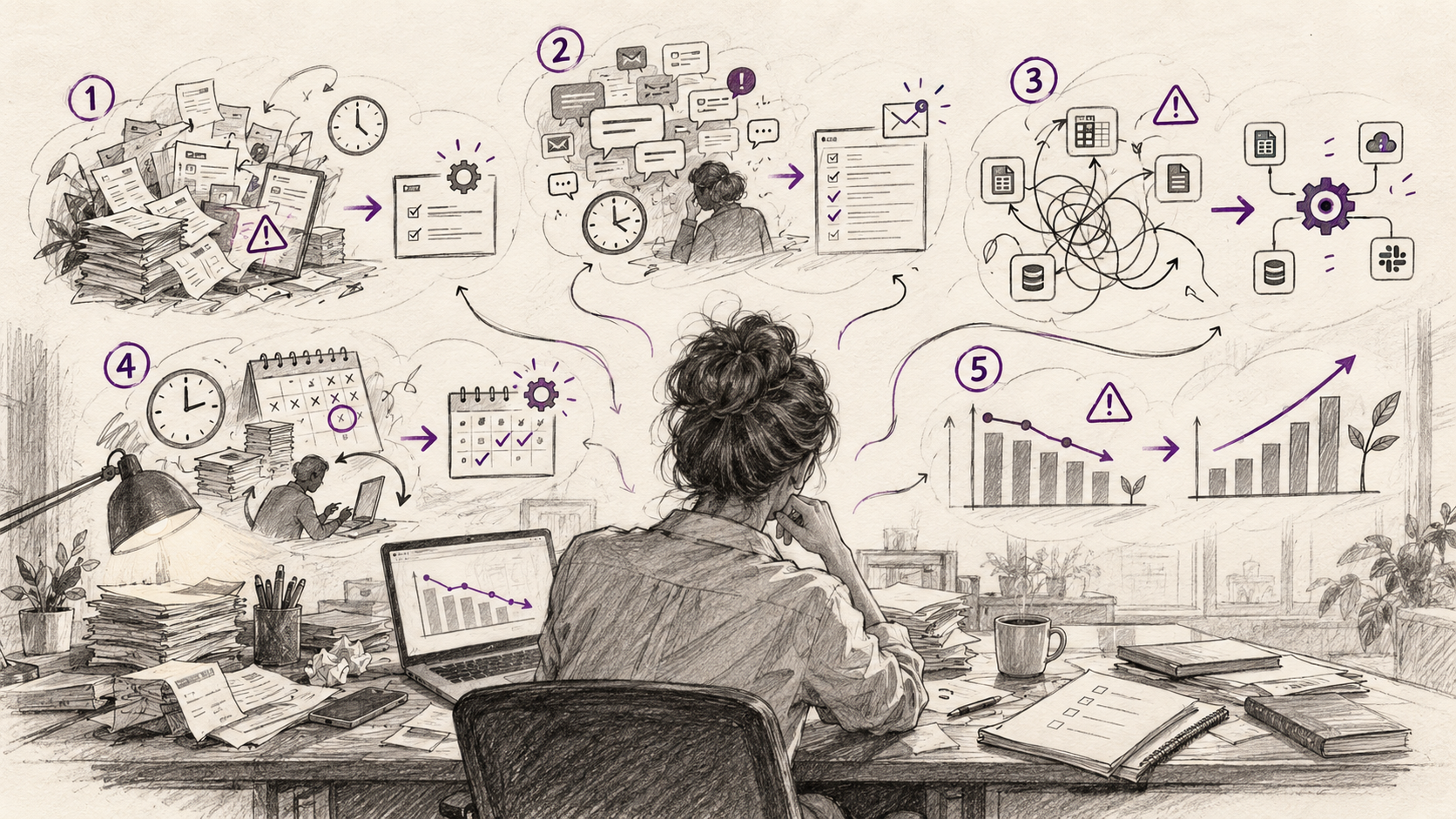
But for most business leaders, generic AI experiments are not enough. What drives results is applying AI to the repetitive workflows that slow teams down every day.
That is where AI agents for small business come in.
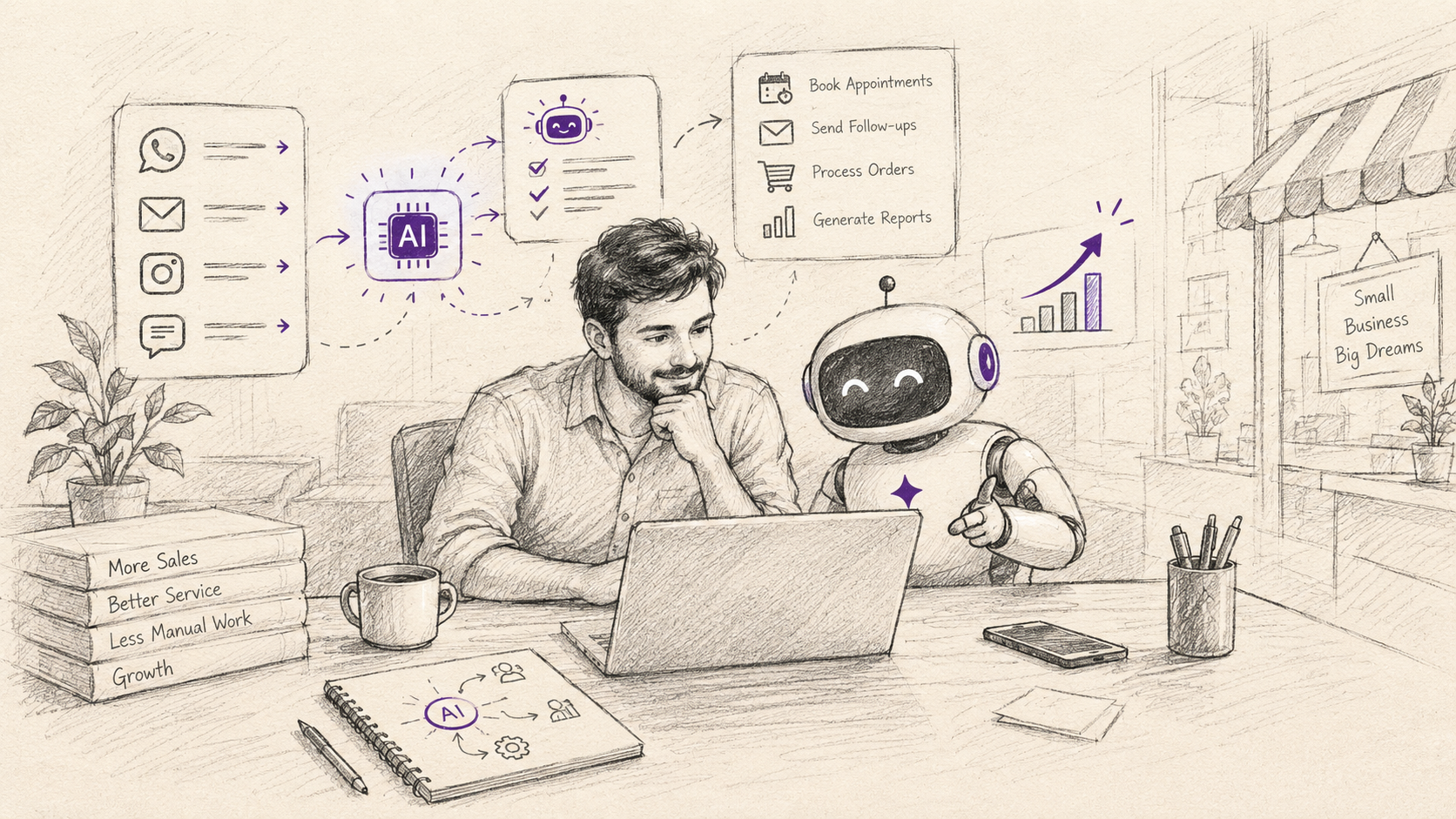
Unlike basic chatbots, AI agents can take action across systems, handle multi-step tasks, and keep work moving without constant manual input. Done well, they function like always-on digital team members: following up on leads, sending invoice reminders, routing support requests, updating records, and reducing the administrative burden on your team.
The opportunity is simple: use AI automation for SMB workflows to improve productivity, speed up response times, and create ROI without adding headcount.
What AI Agents for Small Business Are — in Plain Business Terms
An AI agent is a software-based worker that can complete tasks on your behalf.
Instead of only answering a question like a traditional chatbot, an AI agent can:
- detect a trigger, such as a new lead or overdue invoice
- decide what action to take based on rules and context
- complete steps across multiple tools
- update records and notify your team when needed
For example:
- A finance agent monitors unpaid invoices, sends personalized reminders, and flags accounts that need human follow-up.
- A sales agent qualifies inbound leads, drafts tailored responses, and books meetings automatically.
- A support agent answers common questions, routes more complex tickets, and logs activity in your CRM or helpdesk.
This is why businesses are moving beyond chatbots toward AI agents for customer support and sales and back-office operations. These agents do not replace your systems. They sit on top of your existing stack—CRM, accounting software, helpdesk, email, and calendars—and help those systems work harder.
4 High-Impact AI Agents for Small Business Workflows
The best use cases are not flashy. They are routine, high-volume workflows where speed, consistency, and follow-up matter.
1. Accounts receivable and invoicing
Cash flow is one of the fastest areas where AI can prove value.
An AI agent can:
- generate invoices from completed jobs or approved quotes
- send scheduled payment reminders
- personalize follow-ups based on customer history
- flag overdue accounts for escalation
This is one reason AI-powered invoicing and cash flow for small business is gaining attention. Intuit has reported that AI-generated invoice reminders helped businesses get paid 45% faster—about five days sooner on average.
Useful KPIs include:
- Days sales outstanding (DSO)
- average days to payment
- percentage of overdue invoices
- finance team hours spent on collections
2. Customer support triage and response
Support teams often spend too much time on repetitive questions, status updates, and routing.
An AI agent can:
- answer common inquiries 24/7
- route tickets to the right person or department
- summarize customer issues for faster human handling
- update CRM or support records automatically
This kind of AI automation for SMB workflows improves service without forcing your team to be online at all hours.
Track results through:
- first-response time
- average resolution time
- support hours saved
- CSAT or customer satisfaction scores
3. Sales lead qualification and follow-up
Speed matters in sales. Leads go cold quickly when follow-up is inconsistent.
AI agents can help by:
- responding to inbound leads instantly
- asking qualification questions
- scoring leads based on fit and intent
- booking meetings on sales calendars
- nudging dormant leads back into the pipeline
For growing firms, AI agents for customer support and sales often deliver some of the clearest revenue-linked outcomes because they improve both responsiveness and consistency.
Key KPIs:
- response rate to new inquiries
- meetings booked per week
- lead-to-opportunity conversion rate
- revenue per rep
4. Internal admin and approvals
A surprising amount of owner and manager time disappears into quoting, scheduling, reminders, and approvals.
AI agents can reduce this burden by:
- generating first-draft estimates or proposals
- sending reminders for approvals
- coordinating meeting scheduling
- updating internal systems after decisions are made
KPIs to watch:
- admin hours saved
- quote-to-approval cycle time
- manual data entry errors
- turnaround time for internal requests
How to evaluate ROI before you build anything
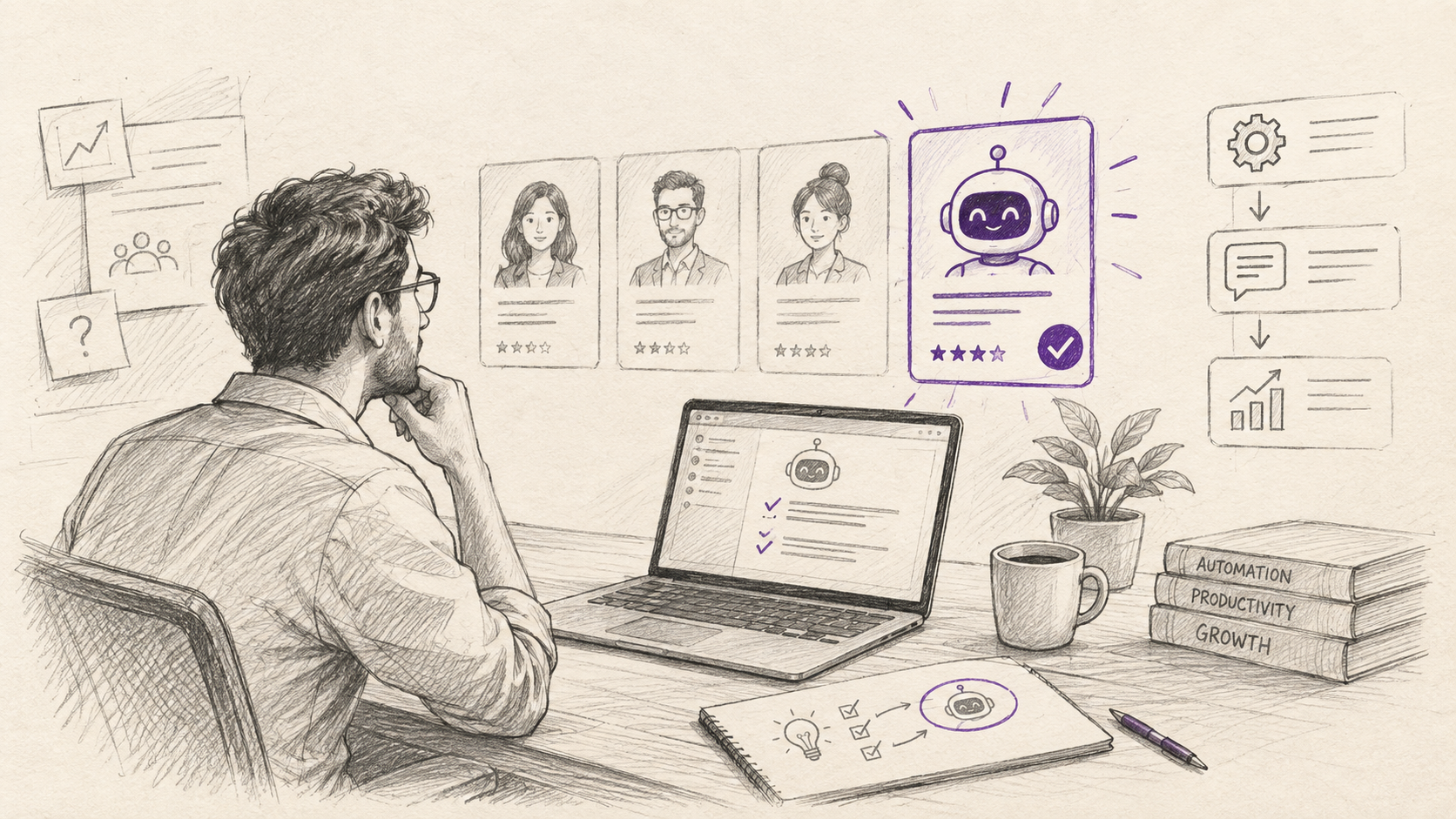
One of the biggest mistakes businesses make is starting with the tool instead of the outcome.
A better approach is to estimate SMB AI ROI and payback period before launching a project.
Use a simple formula:
ROI = (Annual Benefits - Annual Costs) / Annual Costs × 100
To estimate annual benefits, focus on practical business metrics:
- Hours saved × hourly cost of the employees doing the work
- Faster cash collection, such as reducing DSO or payment delays
- Increased sales conversion, from faster lead response and better follow-up
- Reduced errors or rework, especially in admin-heavy processes
Then estimate annual costs:
- software subscriptions
- implementation or consulting support
- integration work
- light training and change management
For most SMBs, the best first projects should have a realistic payback window of 3 to 6 months. If a use case cannot reasonably pay back in that timeframe, it may not be the right starting point.
This is also why businesses increasingly ask how to implement AI agents without in-house data science. The good news is that you do not need a large technical team to get results. Many of the highest-value agent use cases sit on top of tools you already use.
A practical 90-day plan to implement AI agents
The most effective AI initiatives usually start small, stay focused, and prove value quickly.
Days 0–30: Identify agent-ready workflows
Start with an audit of your current systems and bottlenecks.
Look at your:
- CRM
- accounting tools
- helpdesk or ticketing system
- email and communication platforms
- scheduling and approval processes
Then shortlist 2–3 workflows that are:
- repetitive and high volume
- time-consuming for staff
- tied to clear business outcomes
- low enough risk to pilot safely
Good examples include overdue invoice reminders, inbound lead follow-up, and support triage.
Days 31–60: Launch narrow pilots with clear KPIs
Do not try to automate everything at once.
Pick one workflow per pilot and give it a specific target, such as:
- reduce unpaid invoice days by 20%
- cut support first-response time in half
- increase meetings booked from inbound leads by 15%
Measure before-and-after performance so you can see whether the agent is creating value.
Days 61–90: Review, standardize, and decide
At this stage, every pilot should fall into one of three categories:
- Scale: it delivered value and is ready for broader rollout
- Fix: the use case is valid, but the workflow or prompts need improvement
- Stop: it did not produce enough value to justify continued investment
This discipline helps avoid tool sprawl and keeps your AI roadmap focused on outcomes, not experimentation for its own sake.
Governance matters: simple rules that protect the business
AI agents should make operations smoother, not create new risks.
A few practical guardrails go a long way:
Start with low-risk workflows
Begin with non-sensitive, repeatable tasks such as appointment reminders, FAQ responses, or invoice follow-ups before moving into more sensitive HR, legal, or financial decision-making.
Keep a human override in place
Your team should always be able to review, edit, approve, or stop agent actions when needed. This is especially important in customer-facing communication and financial workflows.
Be clear about data access
Make sure you understand what systems the agent can access, what data it uses, and how that data is stored and handled.
Train the team on when to rely on AI
Adoption improves when staff understand that AI agents are there to reduce routine work—not remove judgment where judgment matters.
The real opportunity for SMBs
The value of AI is not in adding another tool. It is in removing friction from the work your business already does every day.
That is why AI agents for small business are getting traction. They help companies improve response times, reduce manual effort, speed up cash flow, and create measurable gains without hiring more staff or building a large internal AI team.
The smartest path is usually not a sweeping transformation. It is choosing one or two workflows where AI can deliver fast, visible results, then scaling from there.
If your business is exploring where AI agents can have the biggest operational impact, Axyva helps SMBs and mid-market teams identify the right opportunities, design practical solutions, and deploy AI agents and automations that deliver measurable ROI. If you are ready to move from AI experimentation to business outcomes, it may be time to start that conversation.
For businesses evaluating AI agents for small business, start with a workflow audit and a narrowly scoped pilot. The most effective AI agents for small business connect to the systems your team already uses. Explore Axyva's AI agent services and business process automation services, or read Google Cloud's overview of how AI agents deliver business ROI.