
A customer asks whether a replacement part will fit their equipment. Your team has the product catalogue, order history, and technical knowledge, but getting those pieces together takes several messages. The future of customer service with AI agents and automations is worth considering through situations like this: can the business move from understanding a request to completing the right next step?
That is a useful direction for business owners planning their service operation. The exact tools will change. A clear process for knowledge, permissions, ownership, and human involvement will remain valuable as those tools develop.
TL;DR
- Plan for customer service that can complete defined tasks as well as answer questions.
- Keep customer channels connected to clear ownership and verified business information.
- Give AI specific permissions and involve people where judgment or approval is required.
- Treat knowledge maintenance and conversation review as ongoing operational work.
- Build your next capability around a measurable customer outcome.
Why the future of customer service depends on completed tasks
Answering “How do I change my booking?” is one level of service. Understanding the request, checking available appointments, obtaining confirmation, and updating the calendar is another. The second requires reliable access to a business system and a process for handling errors.
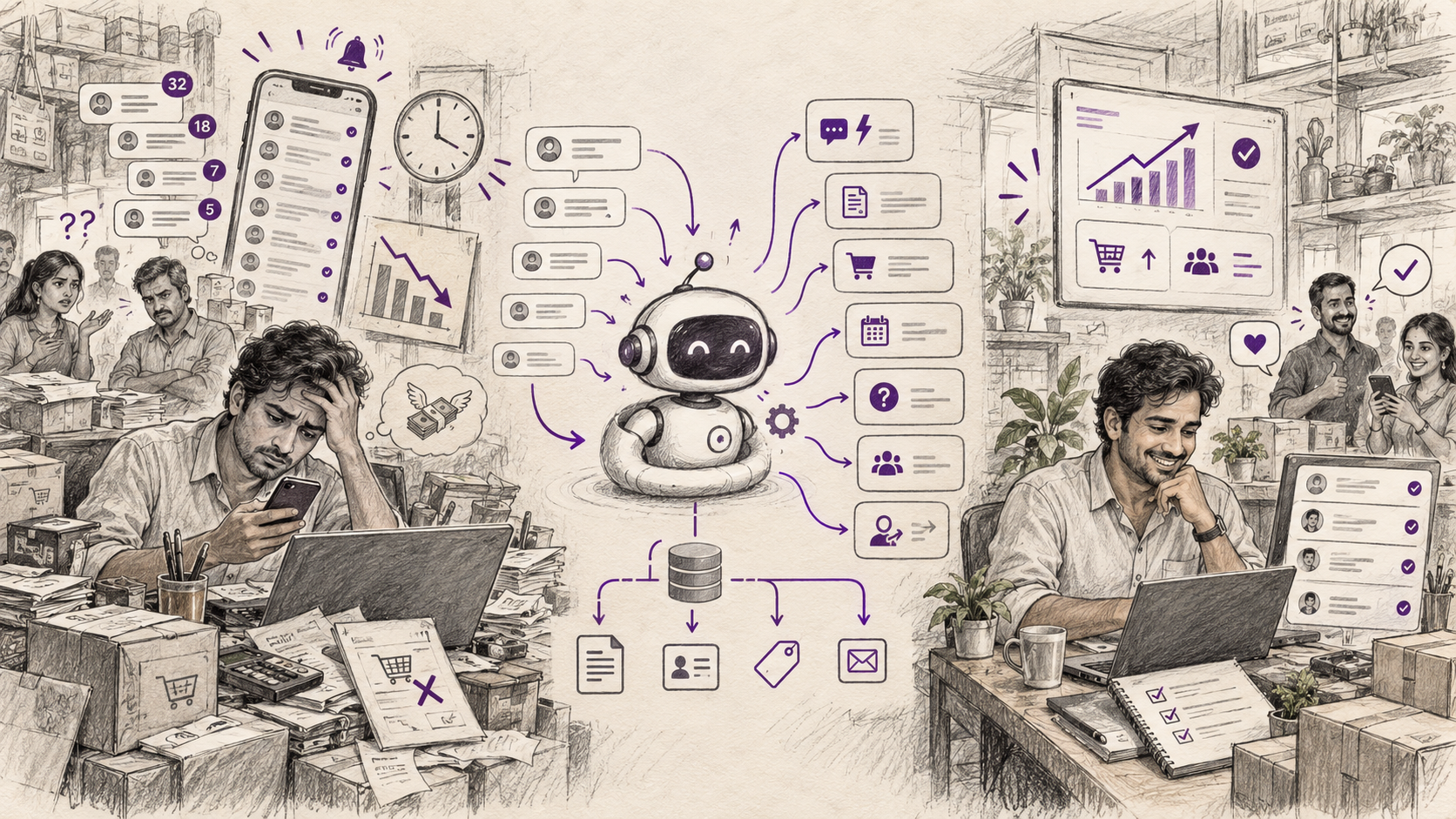
AI agents can interpret the customer’s language and work with information or tools made available to them. Automations can provide a repeatable sequence for the parts of the task that should follow fixed rules. Business owners should decide where each approach is useful.
For example, interpreting a loosely worded product inquiry may benefit from AI. Requiring confirmation before changing a booking should be a defined rule. A price exception may need a manager’s decision. The service process should make these boundaries explicit.
This distinction is reflected in Anthropic’s guidance on effective agents, which separates predefined workflows from systems that dynamically choose their steps and recommends starting with simpler approaches. For a business owner, the practical lesson is to add flexibility where it helps the customer and retain clear rules where consistency matters.
When choosing your next project, ask what the customer should be able to finish. “Receive a confirmed booking” is a more useful design target than “have an AI conversation.” It gives the team a result to test.
Connected service depends on context and ownership
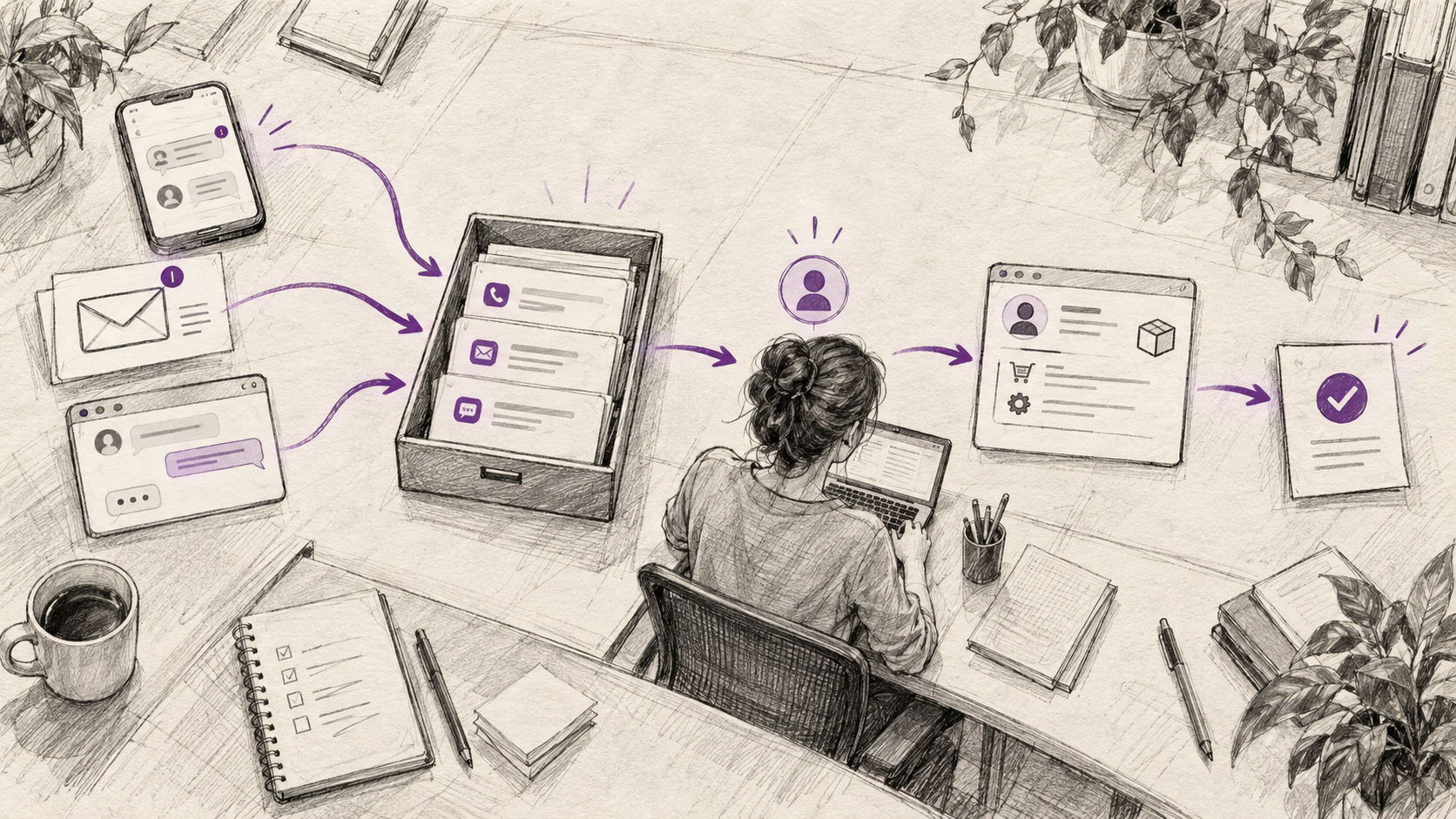
Customers may start on a website, continue over WhatsApp, and send supporting information by email. A future-ready service operation needs a way to carry useful context between those interactions and identify who is responsible for the next step.
That requires more than adding channels. Decide how customer identity will be verified, how related requests will be recognized, and which information staff can access. Never assume that similar names across two channels establish a reliable match.
An omnichannel inbox can provide a shared workspace for supported conversations. Connected business tools can supply relevant records or actions. Confirm the particular channel coverage, identity handling, and integrations needed for your operation before designing a journey around them.
Consider an equipment supplier handling a service request. The assistant collects the model and issue, retrieves information through an authorized connection where available, and passes an unresolved technical question to the service team. A person receives the context, checks the recommendation, and owns the response.
That is an illustrative operating model, rather than a guarantee that every system can support the same steps. The useful question is where your customer currently loses continuity and what information or ownership would repair that gap.
People will need clear authority over service decisions
As assistants become capable of taking more actions, permissions deserve more attention. Access to information and permission to change it are separate decisions. An assistant allowed to retrieve a booking does not automatically need authority to cancel it.
Classify possible actions before launch. General product guidance can use approved knowledge. Account-specific answers need appropriate verification and data access. Changes with financial or operational consequences may need explicit customer confirmation, staff approval, or both.
Define what should trigger a human handoff: uncertainty, conflicting records, a customer requesting a person, an exception to policy, or a failed action. Agree on who receives the request and how the customer will be updated while waiting.
Staff roles may also change. Team members can spend more time reviewing unusual cases, improving knowledge, and resolving problems that cross departments. Make room for that work in their responsibilities instead of assuming the assistant will maintain itself.
The Generative AI at Work research found that the effect of an AI support assistant varied across workers. That makes local training and measurement important. A result from another organization cannot tell you exactly how much time your own team will save.
Ask employees what makes a handoff useful and which exceptions are hardest to resolve. Their experience helps turn broad AI capability into a service process that works on an ordinary busy day.
Your knowledge and review process will shape service quality
An assistant using outdated delivery guidance can give a fast, confident, incorrect answer. A business preparing for more automation needs a practical method for keeping policies, product details, service information, and escalation instructions current.
Give each source an owner. Record when it was checked. Decide which information can be answered from a document and which must be retrieved from a live system. When a policy changes, test the affected customer questions before treating the update as complete.
Build a small set of representative conversations for testing. Include ordinary requests, unclear wording, missing references, unavailable systems, conflicting information, and requests for human help. For each one, write down what a satisfactory answer or next step looks like.
After launch, review examples from both successful and failed interactions. Look for unanswered questions, unnecessary intake, inappropriate confidence, and handoffs that leave staff without enough context. These observations are opportunities to improve the process; they do not all require a more complex AI system.
Customer service can also reveal problems elsewhere in the business. Repeated questions about the same product specification may suggest the catalogue needs work. Frequent requests for dispatch updates may reveal a gap in the order process. Use service conversations to inform those improvements, with appropriate access and handling of customer information.
Build the next capability around one customer outcome
For help choosing where to start, explore our guide to identifying AI opportunities in your business.
Start by mapping a current service journey from the first question to the final result. Mark every repeated question, manual lookup, department transfer, and approval. Choose one frequent task with clear information and a manageable level of risk.
Set a baseline for completion time, repeat contacts, staff effort, and customer feedback. Configure a limited pilot and review whether it improves those measures. Expand the scope when you can explain what improved and how the team handles the cases that remain difficult.
HoneyBerry AI brings customer conversations into an omnichannel inbox where AI agents and the team work together. Axyva helps configure knowledge, workflows, integrations, and human handoffs around the business. You can explore the HoneyBerry AI platform and its approach to business knowledge as part of that planning.
If you are deciding where to begin, book a demo with one customer journey in mind. A clear task, a responsible team, and an honest way to measure the outcome provide a useful foundation for what comes next.